Одбегнуваш да дискутираш затоа што немаш факти, лесен си за побивање бидејќи немаш факти и верглаш со ад хоминем и секакви logical fallacies постојано.
Само во твојата глава, и во ехо коморите од каде се „информираш“, само таму .mil сајтови се основа за градење светоглед.
Статистики од амерички .mil сајтови како објаснување за големиот број жртви во воени вежби во безбедни европски држави. Кажување гачки и приказни дека НАТО персонал не управува со софистицирана техника и оружја внатре од Украина, во војната против Русија.
Демек Украинците ги управувале таквите софистицирани техники и оружја. Истата провидна наратива и пропаганда, како таа дека Украинците развиле техника и воена индустрија за развој на оружје со илјадници километри домет внатре во РФ (а сите знаат дека нема цигла врз цигла останато од производните центри таму во Украина).
Ова не може да се дискутира си испран мозок лик како тебе. Тоа што мозокот ти е испран не е „ад хоминем“ туку фактичка состојба. Секој што може слепо да ги тврди и повторува погоре опишаните пропагандни наративи - секој таков има испран мозок и не способен за објективно размислување. Следствено ни за дискусија.
Затоа избегнувам да дискутурам, и ова сега што ти реплицирам е грешка гледано од тој аспект. Но реплицирам и за другите што читаат или некогаш во иднина ќе читаат, и тоа е единствената причина зошто понекогаш реплицирам. Твојот „квази адвокатски“ настап со „немаш докази“ и „и еве ти докази, статистики од амерички .mil сајтови“, со тоа не може да се дискутира... Тоа е добро само наутро за побрзо проработување на цревните движења (ете едно поле во кое си добар и целосно успешен).
Во меѓувреме еве една интересна статија која прави прв досега колку толку кохрентен обид да ги објасни постапките на САД во последниве години и посебно во последниве месеци... За жал паѓа во истата замка на сите западни новинари/колумнисти: Противниците на САД здраво за готово се земаат за толку „разбрани“ до таа мера да 100% ќе останат пасивни и нема да преземат ништо драстично за да си ја сменат судбината која САД им ја кројат.
Но реално се работи за добра и интересна/информативна колумна, иако долга и детална. Препорака за читање од сите што следат вакви теми.
Ова
@Human е како се гради светоглед: Ги читаш и добрите колумни од противничкиот табор. Не само статистики од амерички .mil сајтови колку за водење „адвокатски“ инает на форуми.
A forensic investigation into how Washington leveraged the war in Iran to replace Nord Stream, save the dollar, and establish total command over the world’s fuel from the Arctic to the Indian Ocean.

richardmedhurst.substack.com
Извадок од долг и интересен текст.
How the US Pulled off an Armed Robbery of the World's Energy Supply and Created the Petrogas-Dollar
A forensic investigation into how Washington leveraged the war in Iran to replace Nord Stream, save the dollar, and establish total command over the world’s fuel from the Arctic to the Indian Ocean.
Richard Medhurst
May 01, 2026
It’s tempting to believe that the US war machine is finished. Militarily, Iran have indeed dealt the US their worst humiliation in modern history — one
I covered in clinical detail.
But in the background, Washington have been quietly carrying out an armed robbery of the world’s oil and gas supply. All of it.

This investigation is featured in the documentary film “
Birth of the Petrogas-Dollar and the Pirate State” by journalist Richard Medhurst.
In just 90 days, the US have executed an energy blitzkrieg decades in the making:
- Hundreds of strikes on Russian tankers and refineries
- Disrupting a third of China’s oil and LNG supply
- Capturing the largest oil reserves on the planet
- Establishing a global naval blockade from the Arctic to the Indian Ocean
And in the process, kidnapped and assassinated two heads of state. We are witnessing the transition of the United States from an empire into a lawless Pirate State, and the birth of what I call the
Petrogas-dollar or
LNG-Dollar.
The timeline of this campaign speaks for itself:

Chaos Is the Objective
In the past, the United States were very sensitive to oil shocks. Closing the Strait of Hormuz would have been a catastrophe, as the US couldn’t produce enough oil to meet demand.
But today, they are the world’s largest producers of oil, gas, and refined products, and the planet’s top exporter of liquefied natural gas (LNG).
Many still buy into the old mantra that high oil prices are bad for the US, but the opposite is true. For the first time during a global shortage, the dollar isn’t crashing while gold surges — it’s the other way around. High energy prices aren’t a threat to Wall Street anymore — they are in fact the objective.
It’s no coincidence the US became the world’s #1 exporter of LNG
after the Ukraine war. The gains were multifold: the US went from supplying just 9% of Europe’s energy to being Europe’s number one source of coal, oil, and LNG.
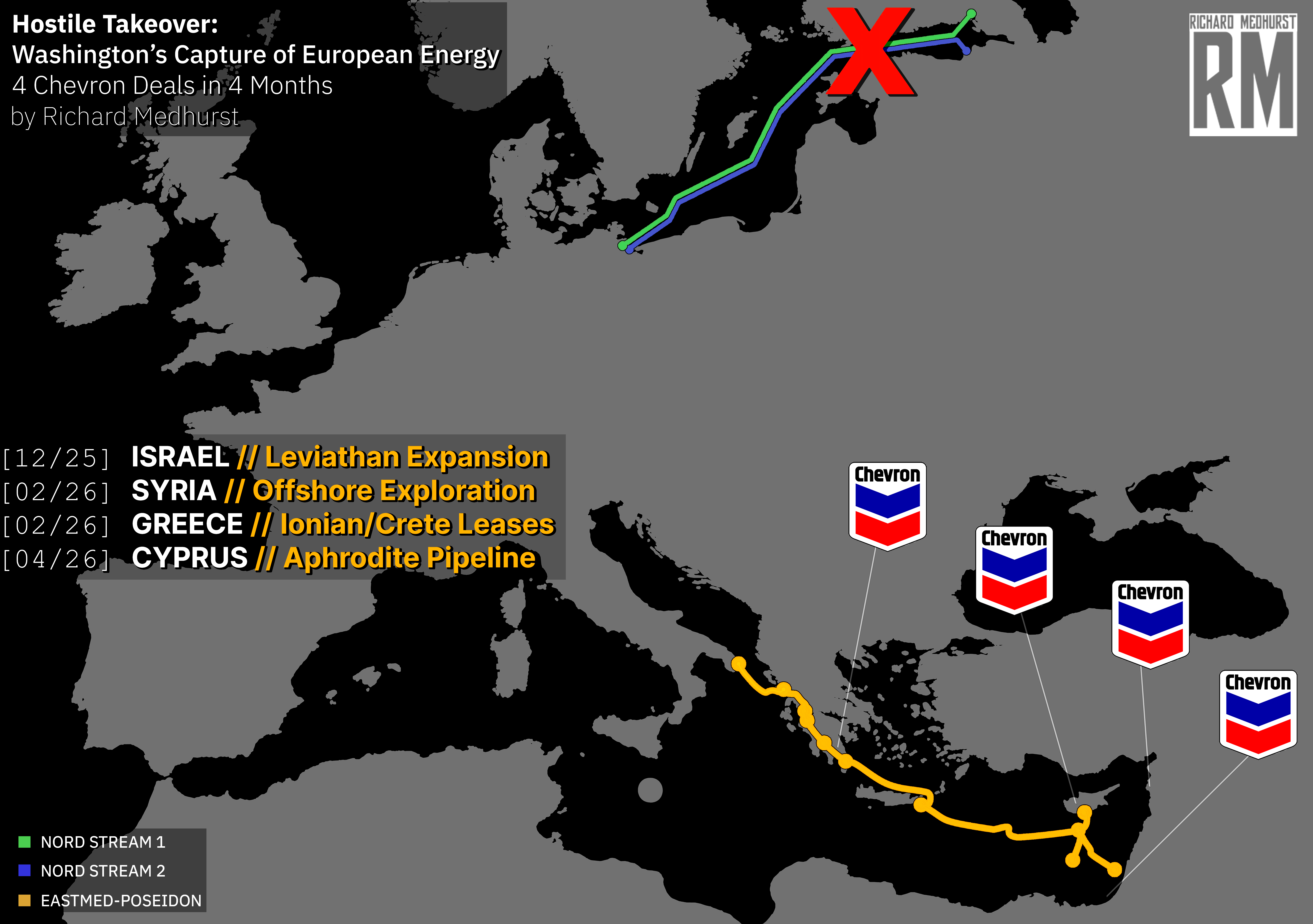
Washington had now constructed an American artery, running from the Levant, to Cyprus, to Greece. The gas, the plumbing and the leases all set — not to mention, an additional LNG exit via Egypt.
The northern gas corridor from Russia was now dead, and a new one — almost perfectly symmetrical — built in its place by a US corporation. The final nail in Nord Stream’s coffin.

The Mediterranean Artery: How the EastMed-Poseidon pipeline and the capture of the Levantine Basin symmetrically replaced Nord Stream as Europe's primary energy corridor.
In total, the entire basin is worth over half a trillion dollars — surpassing the combined profits of BP, Shell, Chevron, ExxonMobil, and TotalEnergies from the entire Ukraine war. These untapped reserves have been kept on ice by the Israeli military, effectively acting as private mercenaries for Corporate America.
It’s no coincidence that all the ports along this coast have been destroyed except Israel’s. By blockading Gaza and crippling the ports in Beirut and Syria, they have ensured Levantines cannot touch their own inheritance — while holding the door open for Chevron to collect.
With Qatar and Iran sidelined and the Mediterranean secured, on the other side of the planet
the US Navy were already clearing the way for Chevron to seize the world’s largest oil fields

Controlling Europe and weakening Russia was, however, only the beginning. The real target is China.

China are too big and competitive for the US to destroy. Washington’s goal is to control them instead.
By cutting off Beijing’s most vital fuel sources, the US want to force a total dependency on American energy. This creates the leverage needed to guarantee the Dollar’s survival while undermining BRICS, the Belt and Road Initiative (BRI), and multipolarity.
China receive around 1/3 of their oil from Venezuela, Russia, and Iran combined —partnerships they consider strategic. The United States proceeded to target all three in the last 90 days with increasing escalation.

China’s Strategic Oil: Total Volume (2025) (Source: GAC China / Kpler & Vortexa)
Venezuela (Operation Southern Spear)
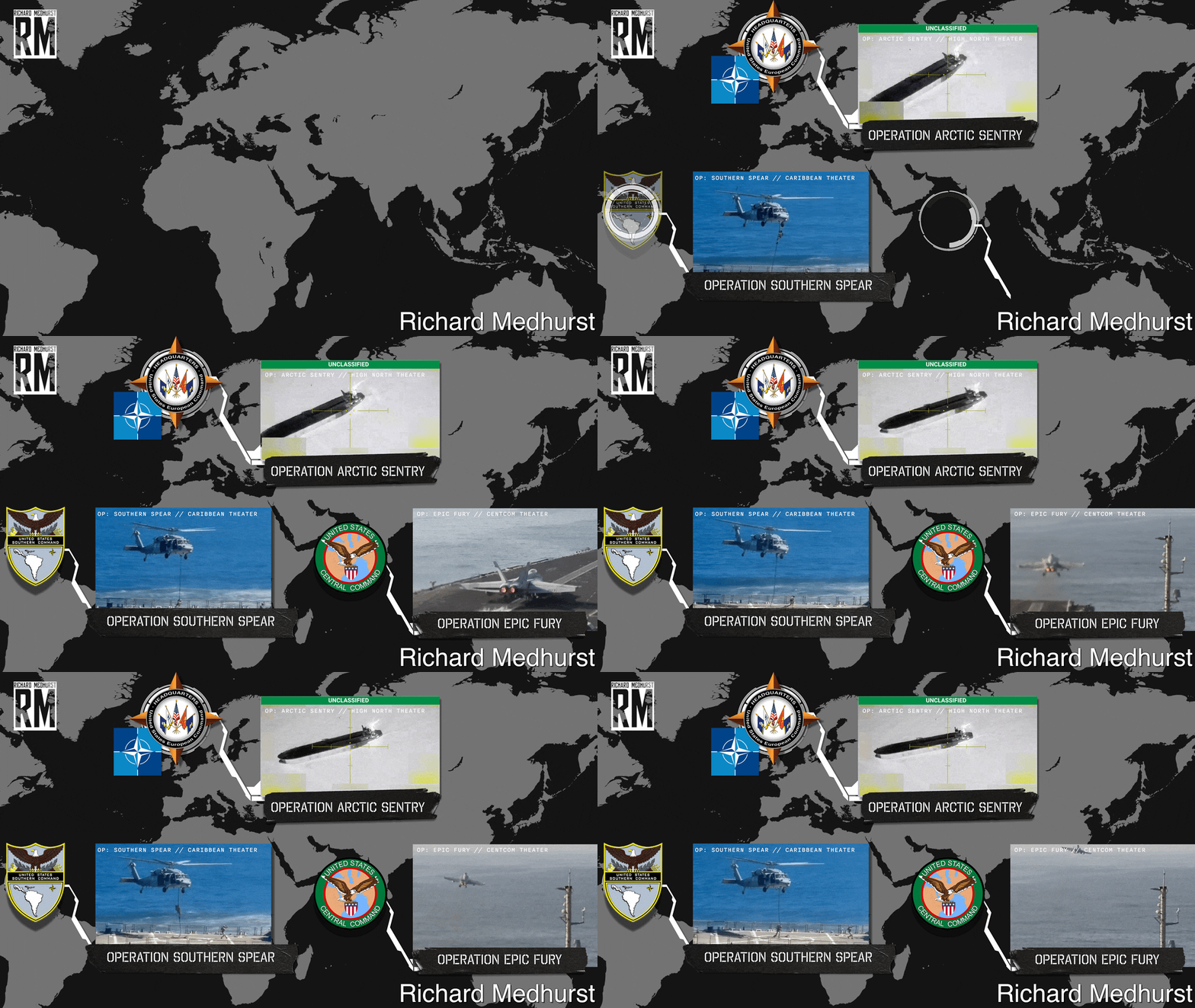
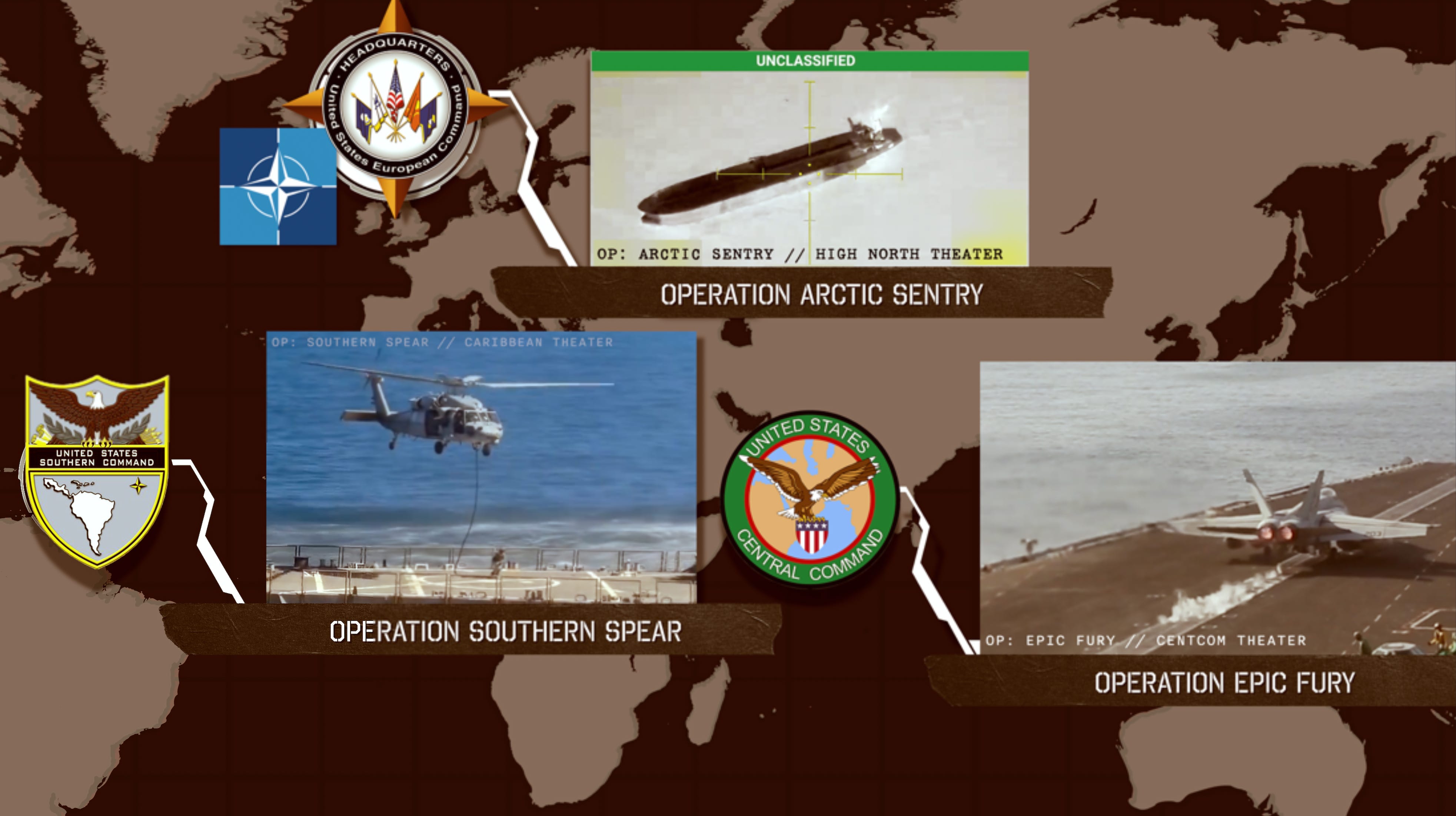
The blockade began in September 2025, when a US fleet were deployed to the Caribbean under the pretext of “fighting narcotics.” Acting under Southern Command (USSOUTHCOM), Washington positioned these ships right on Venezuela’s borders, effectively encircling the country.
...
Trump bragged a few days later (at the “Board of Peace” summit, of all places) that the US now control 62% of the world’s oil. This takeover achieved two critical goals for the Pirate State: first, it immediately cut China off from a vital energy partner, and second, it secured a second strategic petroleum reserve to offset the chaos Washington were about to unleash on Russia and Iran.
Russia (Operation Arctic Sentry)
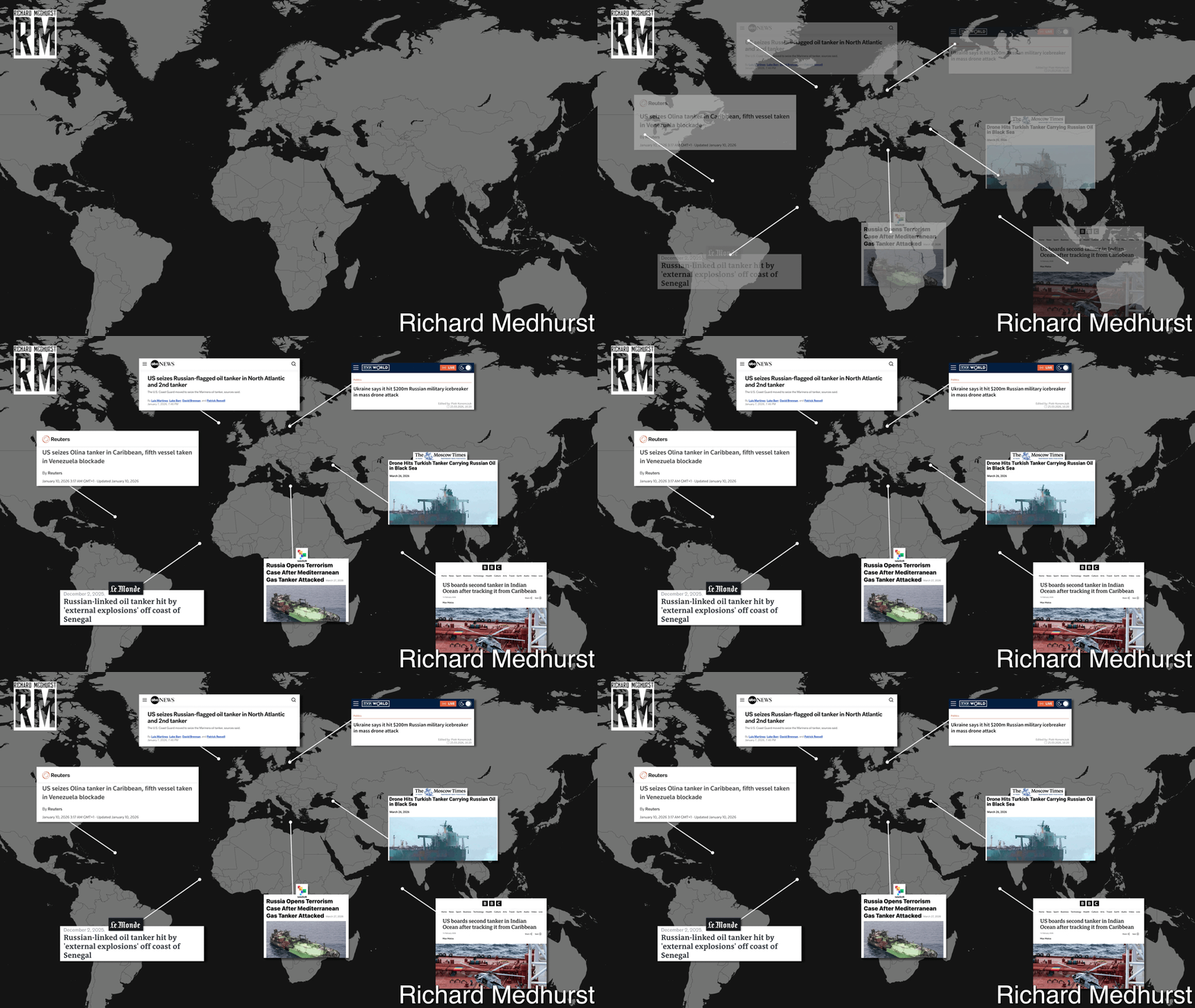
In the last months, US and NATO forces have been literally hunting down Russian oil and gas ships across the entire planet, from the Mediterranean Sea, to the Black Sea, Baltic Sea, Caribbean, Arctic, North Atlantic, and Indian Ocean.

Russia provide 17% of China’s total oil imports. While some is piped, the vast majority leaves by sea. This includes the critical medium Urals blend that China’s independent “teapot” refineries rely on. Because these exports leave from Russia’s western ports in the Baltic Sea, they are particularly vulnerable due to their proximity to NATO.
The US knew that China would immediately look to Russia to replace the oil lost in Venezuela — so to cut them off, Washington redeployed key strike groups from the Caribbean to the Arctic and Atlantic. This is precisely why NATO quietly established “Operation Arctic Sentry” in February, making no effort to conceal its true purpose:
“China’s interest in the Arctic is also growing, as Beijing seeks to gain access to energy, critical minerals and sea lines of communication. Furthermore, increased Russia-China cooperation has strategic and operational implications for NATO’s deterrence and defence posture in the region.” —NATO Arctic Security Brief
Simply put: it’s an oil and gas embargo. NATO are openly admitting that their goal is to sever Beijing’s “access to energy, critical minerals”, and disrupt their growing trade with Russia. None of these things are security issues. They are geostrategic and economic.
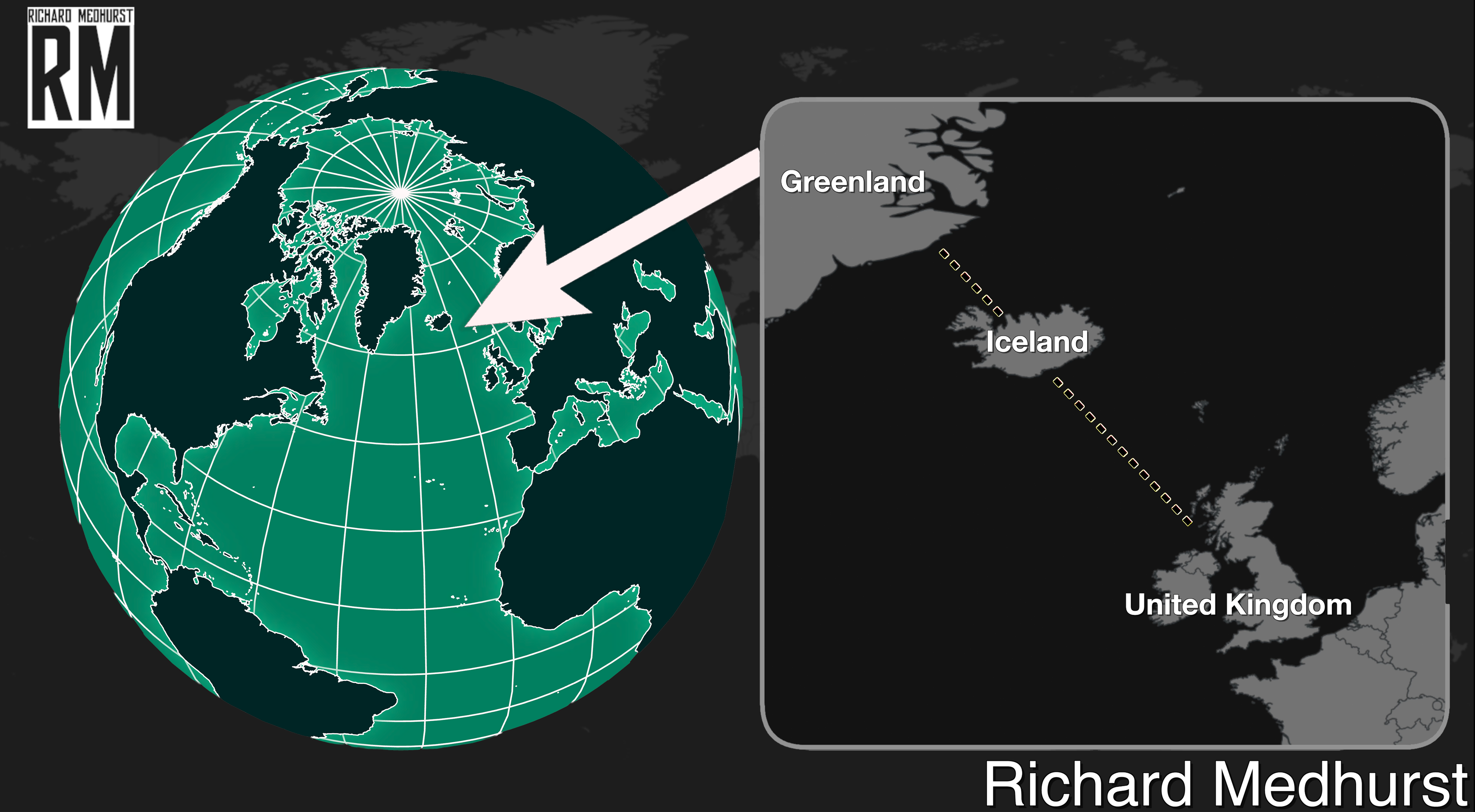
This explains why Donald Trump is so interested in Greenland and Canada, and why the Royal Navy deployed a carrier strike group last month to the Greenland-Iceland-UK (GIUK) corridor — and
again this week. The goal is to corner Russian tankers in the Baltic and the Arctic before they are even able to leave.

Greenland-Iceland-United Kingdom (GIUK) Corridor: gateway to the Arctic Circle.
This passage has been a critical chokepoint since the Cold War; it was once the only way Russian submarines could reach the Atlantic. NATO are now returning there with a different goal in mind: harassing trade along the Northern Sea Route (NSR), Russia’s primary shortcut to Asia — and in anticipation of the future Transpolar Sea Route (TSR).
The media described the launch of Arctic Sentry as a diplomatic “off-ramp” to “defuse tensions” between the US and Greenland. Clearly this mission wasn’t designed to “defuse” anything, but instead a Trojan Horse to move NATO troops into position to implement a blockade — with the participation of many Western navies, including France, Sweden, Spain, and Britain, all actively helping Washington pirate Russian oil.
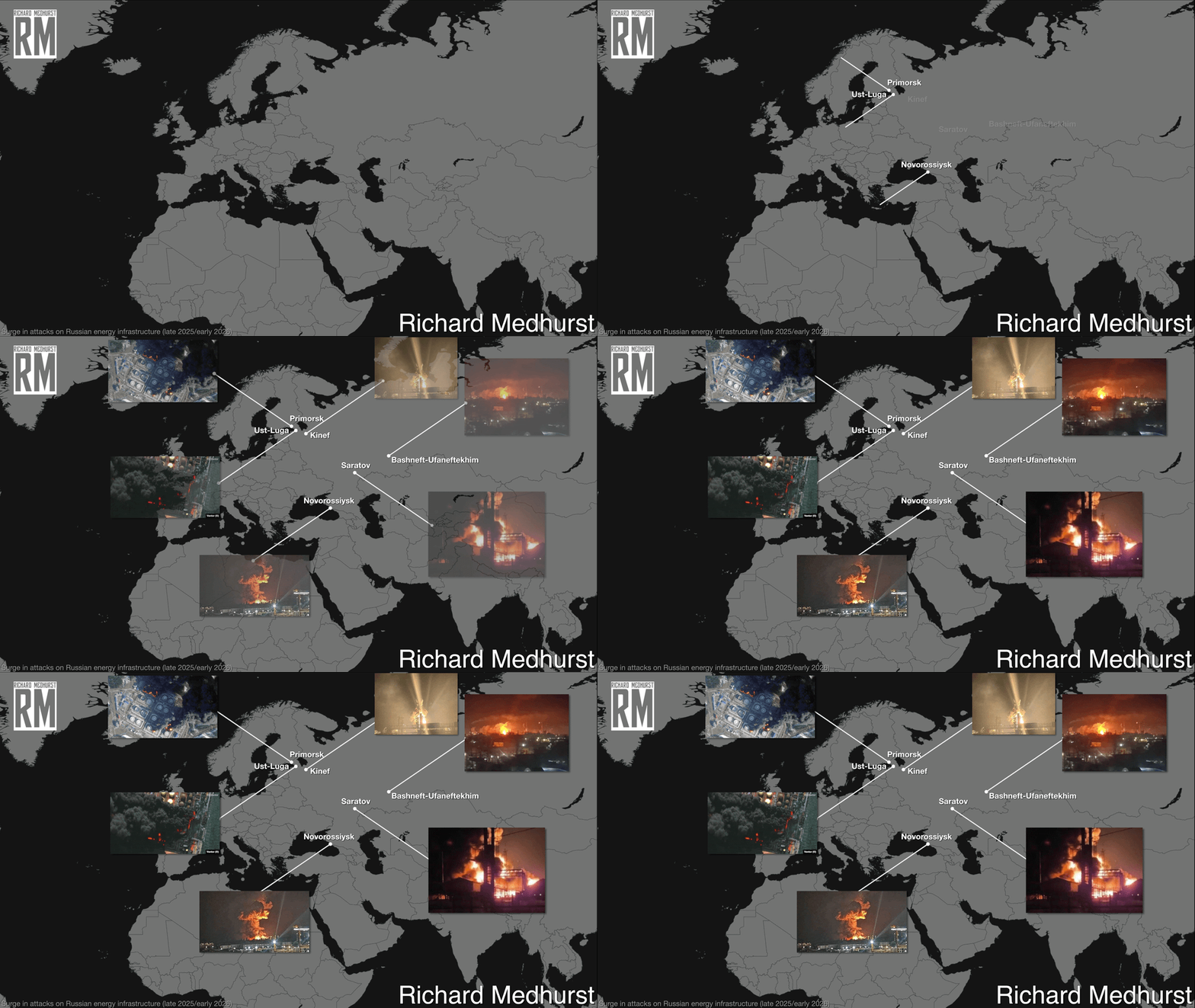
When I first laid out my “Pirate State” thesis in March, only Russian tankers were being hit at the time. But throughout the course of this investigation, these attacks escalated from hitting ships, to hitting refineries and export hubs.
This supports my core argument that we are witnessing a physical energy war. In March alone, around 40% of Russia’s seaborne oil export capacity was disabled — the most severe logistical disruption in modern Russian history. As I publish this, the results from April are irrefutable: this was the most violent month so far, forcing
Russia to slash oil output by 300,000 to 400,000 barrels per day — the sharpest production cut in 6 years. The latest
OPEC report confirms Russia sit 400,000 BPD below their official quota, which shows that these strikes are having a definitive effect on the ground.
And that’s not even counting what was lost/pirated at sea.

The March Blitz Coordinated strikes on Russia’s 3 primary export hubs and 5 strategic refineries
In the 4 years of the Ukraine war, Russia’s energy infrastructure has never been struck this deep nor on this scale. While the campaign began in Autumn 2025, the Blitz on Russian energy only truly ramped up once Washington had secured Venezuela and launched the war on Iran.
The calculated timing, and global scale of this pincer move show that the Pirate State were waiting until they had secured their own strategic reserve before moving in for the kill — achieving two goals at once: interdiction of China’s supply, and consolidation of the global market.
Interactive: Hover over the peaks to see the breakdown of strikes on Russian energy